

Play
Fishing in Turks and Caicos. Bonefish to Marlin, and everything in between .
Fifteen minutes from the dock to the deep. Bonefish flats on the outer islands. Reef, wreck, and pelagic charters year-round.
Fifteen minutes from the dock to the deep. Bonefish flats on the outer islands. Reef, wreck, and pelagic charters year-round.
Fishing in Turks and Caicos is one of those things that quietly pulls repeat guests back year after year. The reef drops off into deep water fifteen to twenty minutes from the marina. The bonefish flats on North and Middle Caicos are among the best in the Caribbean. And the pelagic species that migrate through — marlin, wahoo, mahi, tuna — mean there’s always something to chase, whatever month you come.
Fishing these waters has been one of our passions for over forty years. Some of our best days on the water have happened right here. First bonefish on the flats. Releases with the kids offshore. Slow mornings that turned into wahoo runs. When we recommend a captain, a season, or a spot, it’s from decades of showing up ourselves.
Whether you’ve been on the water your whole life or you’ve never held a rod, here’s what to know before you book.
The short answer
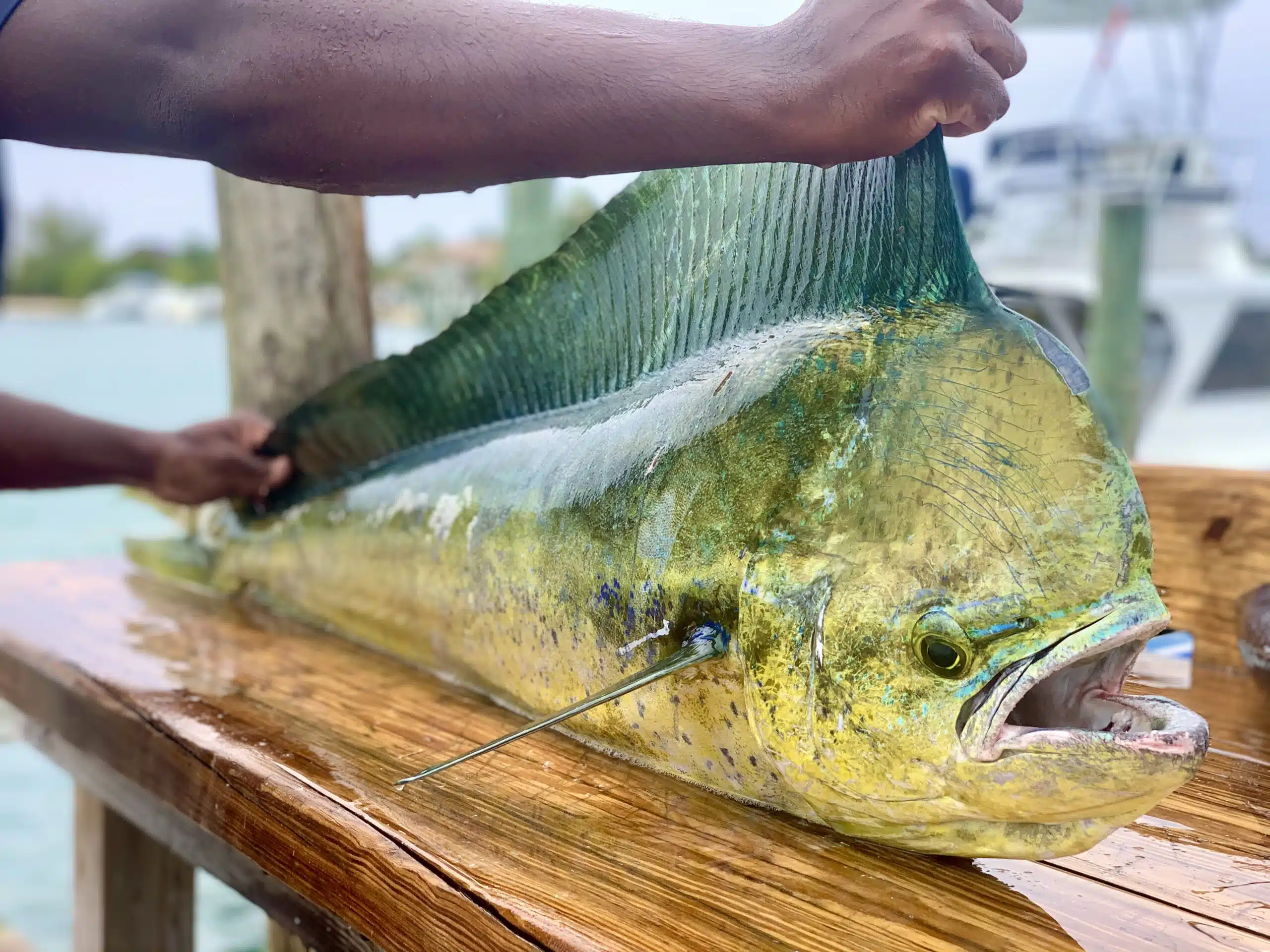
Deep sea — 15 to 20 minutes from the dock. Marlin, wahoo, mahi, tuna. Different species peak in different months.
Reef / bottom fishing — snapper, grouper, triggerfish. Great for first-timers, kids, and lighter tackle. Constant action.
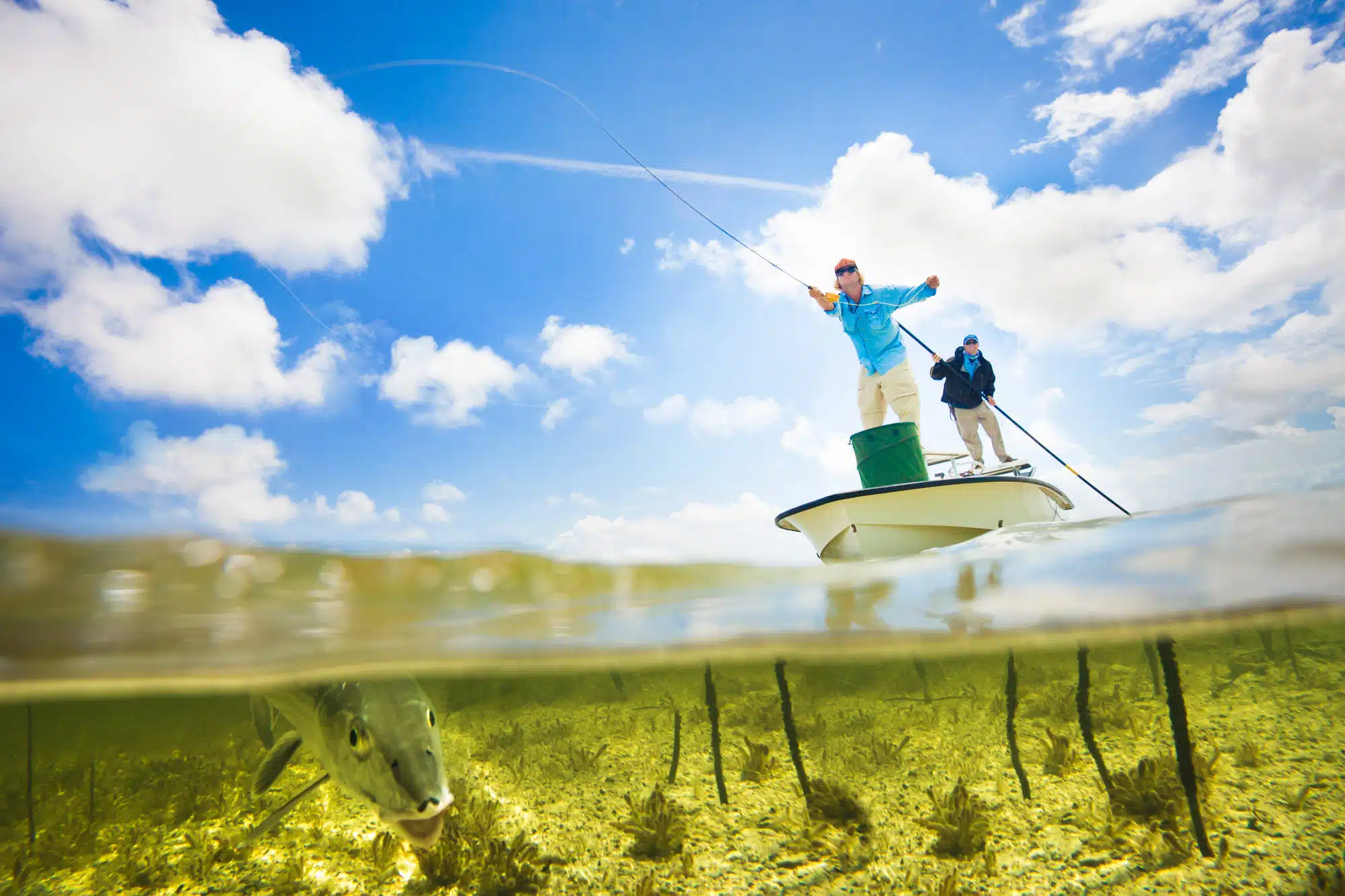
Bonefishing — the flats off North and Middle Caicos. Sight-cast to bonefish, permit, jacks. Full-day trip from Provo, or base yourself on North Caicos.
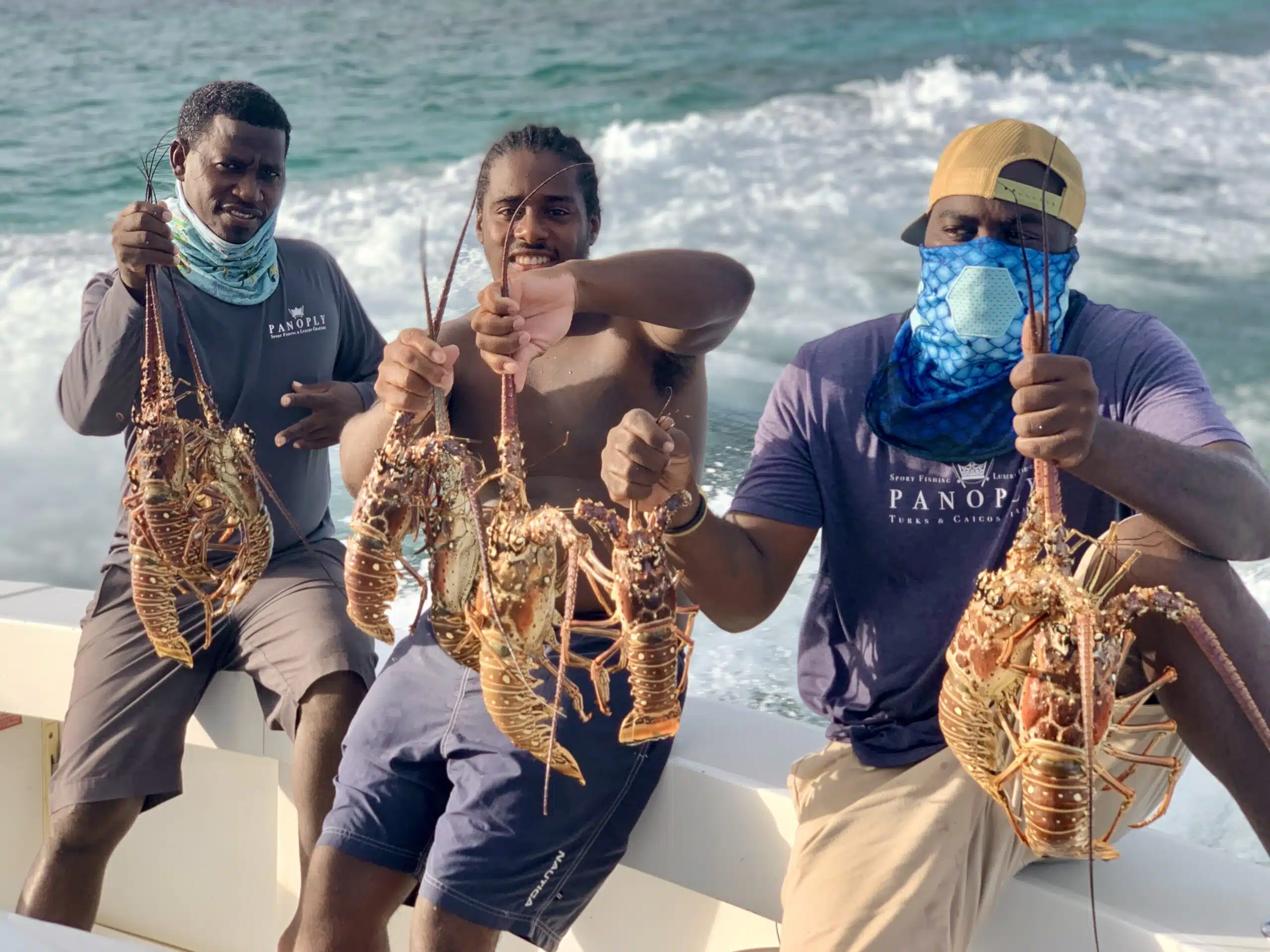
Lobster & conch — free-diving only (no scuba). Lobster season roughly August through March. Conch is available year-round for local consumption.
Who to book — Panoply Sport Fishing & Luxury Charters, our sister company. Fifteen-plus years, tournament pedigree, deep-sea to reef.
Why the fishing is good.
Five things about these waters, all of them geographical, biological, or thermal. Together they explain why the fishing here is what it is.
The drop-off is close. The north-shore reef falls away into deep water within a couple of miles of the beach. Fifteen to twenty minutes from the marina and you’re trolling blue water in a thousand feet or more. Most Caribbean destinations put an hour of boat ride between you and the pelagic zone. That’s the difference between a real half-day charter and a wasted morning.
Structure, everywhere. The ocean floor around Turks and Caicos is anything but flat. Deep channels between the islands (the Turks Passage, the Mouchoir Passage), walls that plunge 7,000 feet, coral heads scattered across the banks, ledges, canyons, ancient wrecks — all of it forms fishy superhighways. Predators know where the current pinches through, where the bait concentrates, where structure meets deep water. So do the captains who’ve been reading these charts for decades.
The Caicos Banks are enormous. On the south side of Provo, a vast shallow shelf stretches for miles. Reefs, wrecks, and coral heads dot it end to end — prime bottom-fishing ground for snapper, grouper, triggerfish, and more. The bonefish flats off North and Middle Caicos are part of this same shelf, one of the largest bank systems in the Caribbean.
The food chain is dense. Where deep water meets shallow, nutrient-rich currents push baitfish onto the reefs. Sargassum weed lines drift through in season, holding schools of mahi and their prey. The reef ecosystem is healthy and diverse — which means the bait is there, which means the predators are there. If you want to understand why the fish keep showing up, look at what they’re eating.
Temperatures that work year-round. The water sits between 78°F and 85°F depending on the month, and that thermal range keeps different species turning over throughout the year. Wahoo prefer the cooler winter water. Blue marlin and yellowfin tuna move in on the summer warm-ups. Bonefish and reef species hold across the whole range. There’s always something in season.
Four kinds of fishing.
Which one to book depends on the group, the day, and what you’re after.
All ages, with the right boat
Deep sea fishing.
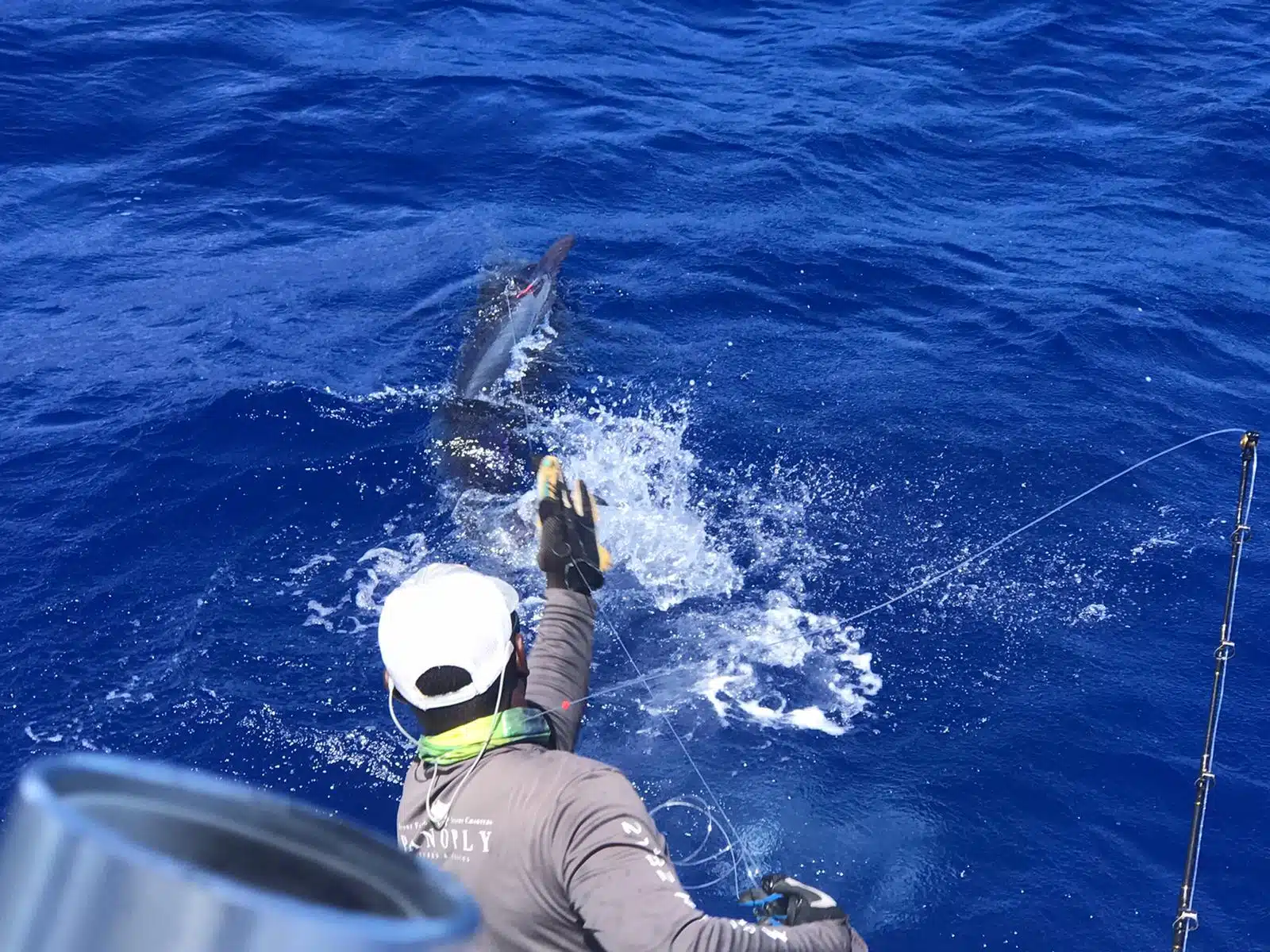
Trolling the blue water 15–20 minutes off the north shore. Marlin, wahoo, mahi, tuna. Conventional reels and a mix of lures and natural bait.
Half-day, three-quarter, or full-day charters. Works for every age — the smaller the kids, the bigger the boat you want. A steady deck, shade, and space matter more than experience level.
Kids & first-timers
Reef & bottom fishing.
Anchored over a reef, wreck, or coral head. Snapper, grouper, triggerfish. Spinning reels, lighter tackle, near-constant action.
A great starter fishing day — grandparents through kindergarteners can all catch something. Fish typically 5–20 lb.
The purist's day
Bonefishing on the flats.
The outer flats off North and Middle Caicos are some of the best bonefish grounds in the Caribbean. Sight-casting to "grey ghosts" with a fly or spinning setup. Permit and jack crevalle also work these waters.
Local guides pole the shallows for you. Also possible in Juba Sound and Turtle Tail on Provo.
Free-dive only
Lobster & conch diving.
Both are called "diving" here because scuba gear is not permitted for harvesting them. You hold your breath and go down.
Lobster season runs roughly early August through March. Conch is available year-round for local consumption, though export is closed July 16 through October 14. Size limits apply for both.
What’s biting, when.
The bite varies year to year, but the general seasons are reliable enough to plan around. The calendar below shows what we expect biting inshore, offshore, and on the flats through the year.
| Species | J | F | M | A | M | J | J | A | S | O | N | D |
|---|---|---|---|---|---|---|---|---|---|---|---|---|
| Wahoo | ● | ● | ● | ● | ● | |||||||
| Mahi-mahi | ● | ● | ● | ● | ||||||||
| Blue marlin | ● | ● | ● | ● | ● | |||||||
| Yellowfin tuna | ● | ● | ● | ● | ● | |||||||
| Bonefish | ● | ● | ● | ● | ● | ● | ● | ● | ● | ● | ● | ● |
| Reef fish | ● | ● | ● | ● | ● | ● | ● | ● | ● | ● | ● | ● |
| Lobster | ● | ● | ● | ● | ● | ● | ● | ● | ||||
| Conch | ● | ● | ● | ● | ● | ● | ● | ● | ● | ● | ● | ● |
Coral dots mark peak season. Our best guess for the year — the bite varies season to season.
In quick summary
Wahoo — cooler months, roughly November through March. The fish most repeat visitors come back for.
Mahi-mahi (dolphin fish) — spring and early summer, roughly March through June. Fast action, colourful catch.
Blue marlin & yellowfin tuna — warmer months, roughly May through September. Peak summer for the biggest pelagics.
Bonefish — year-round on the flats.
Reef species — year-round, though the bite is often better on calmer days.
Lobster — early August to end of March. Conch — available year-round for local consumption (export only is seasonally closed).
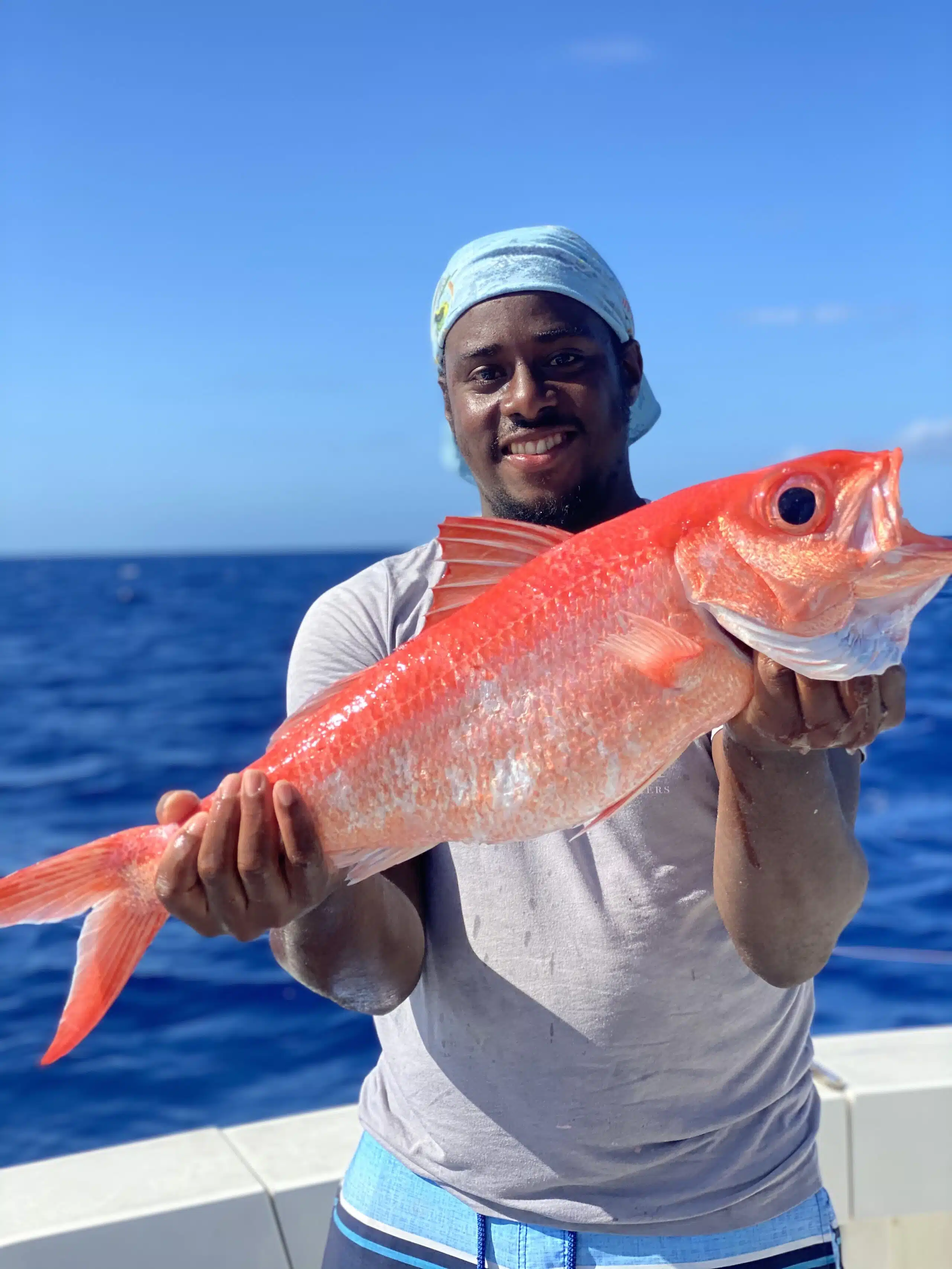
Who to book with.
Our sister company, Panoply Sport Fishing & Luxury Charters, is our first recommendation. In business since 2008, luxury interior, experienced crew who grew up fishing these waters, and a real tournament pedigree — Wine Cellar Golf and Fishing Tournament, Caicos Classic IGFA Billfish Release Tournament, and the Offshore World Championship in Costa Rica.
Panoply also runs custom fish-and-snorkel combinations that work well for mixed-experience groups — half the family fishing, the other half in the water on a reef.
Other deep sea and reef operators we recommend — Catchin’ Caicos, Grand Slam Fishing, and M and J’s Charters. All Provo-based, all with the local knowledge that separates a good day on the water from a wasted one.
For bonefishing on the flats — Generation Tours led by Capt. Edison Brooks, DB Tours and Talbot’s Adventures . Specialist guides who know the North and Middle Caicos flats better than anyone. The concierge team can book directly.
Fishing with the family
Fishing charters work for every age with the right crew. See our family vacation guide for the age-by-age playbook.