


Featured
Things to do in Turks and Caicos on land.
Beyond the beach — the best activities in Providenciales and the outer islands.
Beyond the beach — the best activities in Providenciales and the outer islands.
The Turks and Caicos is, first and last, a place people come for the water. The reef, the beach, the light on the shallows — these are the reasons the flights are full. But Providenciales is a proper island, with a proper life on it, and there is more to do here than swim.
The list below covers the best land-based activities on Provo and the outer islands — from horseback rides on Long Bay to plantation ruins, a world-class golf course, the island’s one museum dedicated to Junkanoo, and a rescue centre full of potcake puppies who need walking. None of it requires advance planning beyond a phone call. Most of it will be the thing you tell people about when you get home.
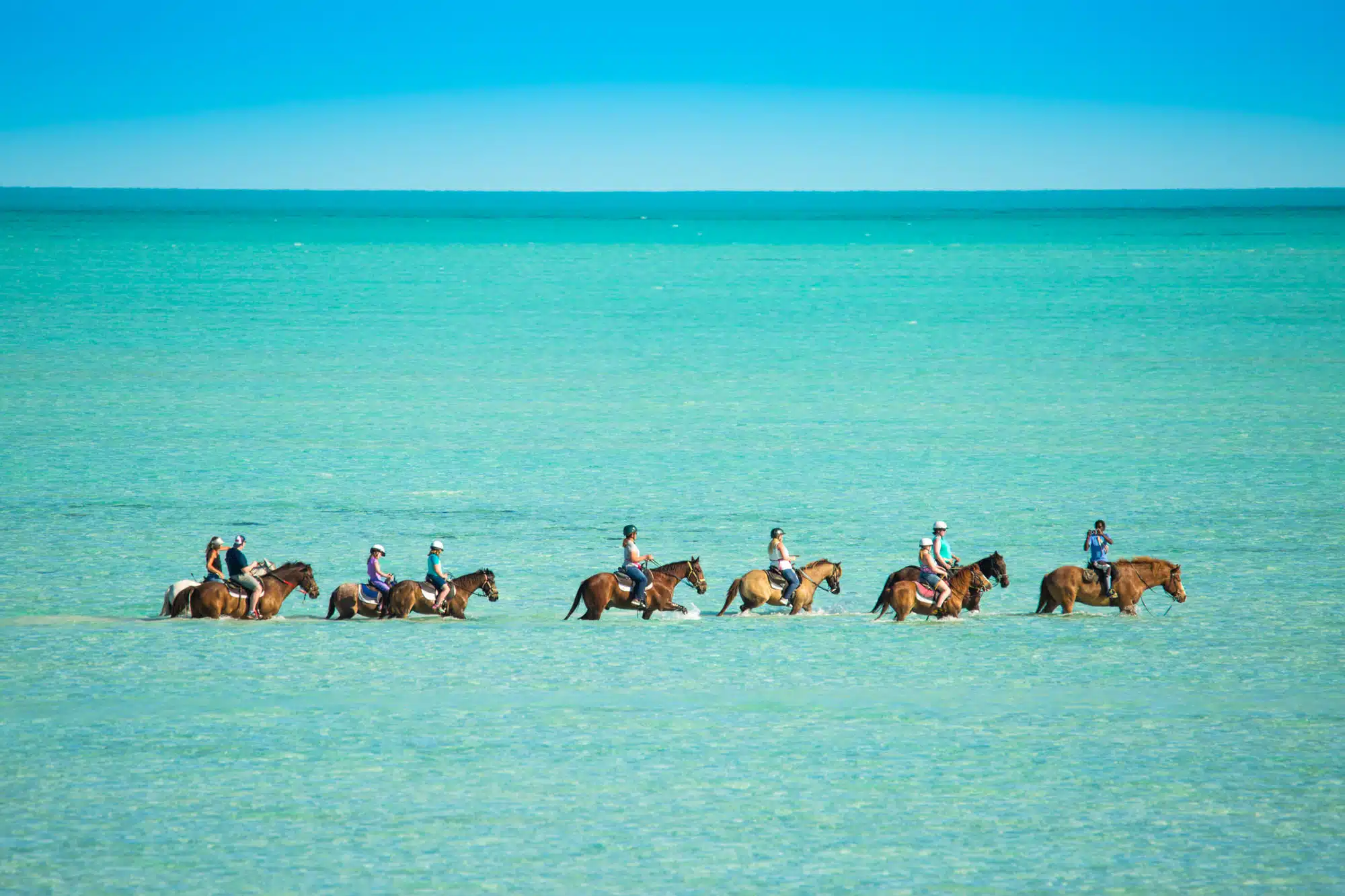
Horseback riding on Long Bay Beach.
Provo Ponies — the only way to see this end of the island.
Long Bay, on the south-eastern shore of Providenciales, is the island’s kiteboarding beach — wide, shallow, windswept, and largely undeveloped. It is also, at the right time of day, one of the most beautiful stretches of sand on the island. The best way to see it is on horseback.
Provo Ponies operates out of Long Bay Hills and offers rides for all experience levels. The route takes you through the neighbourhood to a dirt trail and down to the beach, where the horses move through the shallow water at the edge of the tide. The combination of the animal, the water, the wind, and the light at Long Bay is one of those experiences that sits outside the normal register of a beach holiday. Children and adults both come back from it looking different.
Book in advance — it fills up in season.
Golf at the Royal Turks and Caicos Golf Club.
The only 18-hole course in the country, and a better one than its location might suggest.
The Royal Turks and Caicos Golf Club, known as the Provo Golf Club until late 2021, sits near Grace Bay and is the only 18-hole course in the country. It is a par-72 target-style layout designed by Karl Litten, opened in 1992, and it plays to just over 6,700 yards from the back tees across limestone outcrops and water, with the trade winds as a permanent additional challenge. Tee times are best booked in advance.
Cheshire Hall Plantation.
200-year-old ruins in the centre of Provo — and one of the most honest hours you’ll spend on the island.
Cheshire Hall sits five minutes from downtown Providenciales and is, by some margin, the most significant historical site on the island. It is the remains of a cotton plantation established by British Loyalist Thomas Stubbs in the late 1700s — one of the estates built by Crown land grant holders who arrived after the American Revolution with enslaved workers and the intention of making Sea Island cotton pay. The cotton economy failed within a generation. Thomas Stubbs sold the estate to his brother Wade in 1810, and most of the planters left.
What stands today is a considered ruin — stone walls, the great house footprint, outbuildings, and planters’ quarters — managed by the Turks and Caicos National Trust. Hurricane Irma damaged the great house in 2017. The admission is $15 and includes a 30-minute guided tour that covers the plantation’s history, the cotton cultivation cycle, and the lives of the people who worked the land. It is a serious place, treated seriously.
It is also, for visitors who take it on, genuinely affecting. The Turks and Caicos has a history that most tourists pass through without noticing. Cheshire Hall makes it hard not to notice.
A Jeep around the island.
The fastest way to understand the place you’re staying in.
The instinct on most Caribbean islands is to stay in the resort corridor. On Providenciales, where the island is 24 miles long and a car rental is straightforward, the instinct is worth resisting.
Rent a Buggy offers Jeeps and 4x4s by the day. A full circuit of the island takes three to four hours at a relaxed pace and covers the kinds of terrain — Blue Hills, the South Side, the road out to Chalk Sound, the quieter beaches at Silly Creek and Five Cays — that most visitors never see. The landscape on the south side of the island is different from Grace Bay: drier, flatter, more open, the mangroves and tidal flats giving way to the Caicos Banks.
Key stops: Sapodilla Hill, where 18th and 19th-century sailors and islanders carved their names and dates into the limestone bluff above the anchorage — one of the most unusual and quietly moving spots on the island. Blue Hills settlement, one of Provo’s oldest settlements. The Bight, where the Thursday Fish Fry takes over once a week.
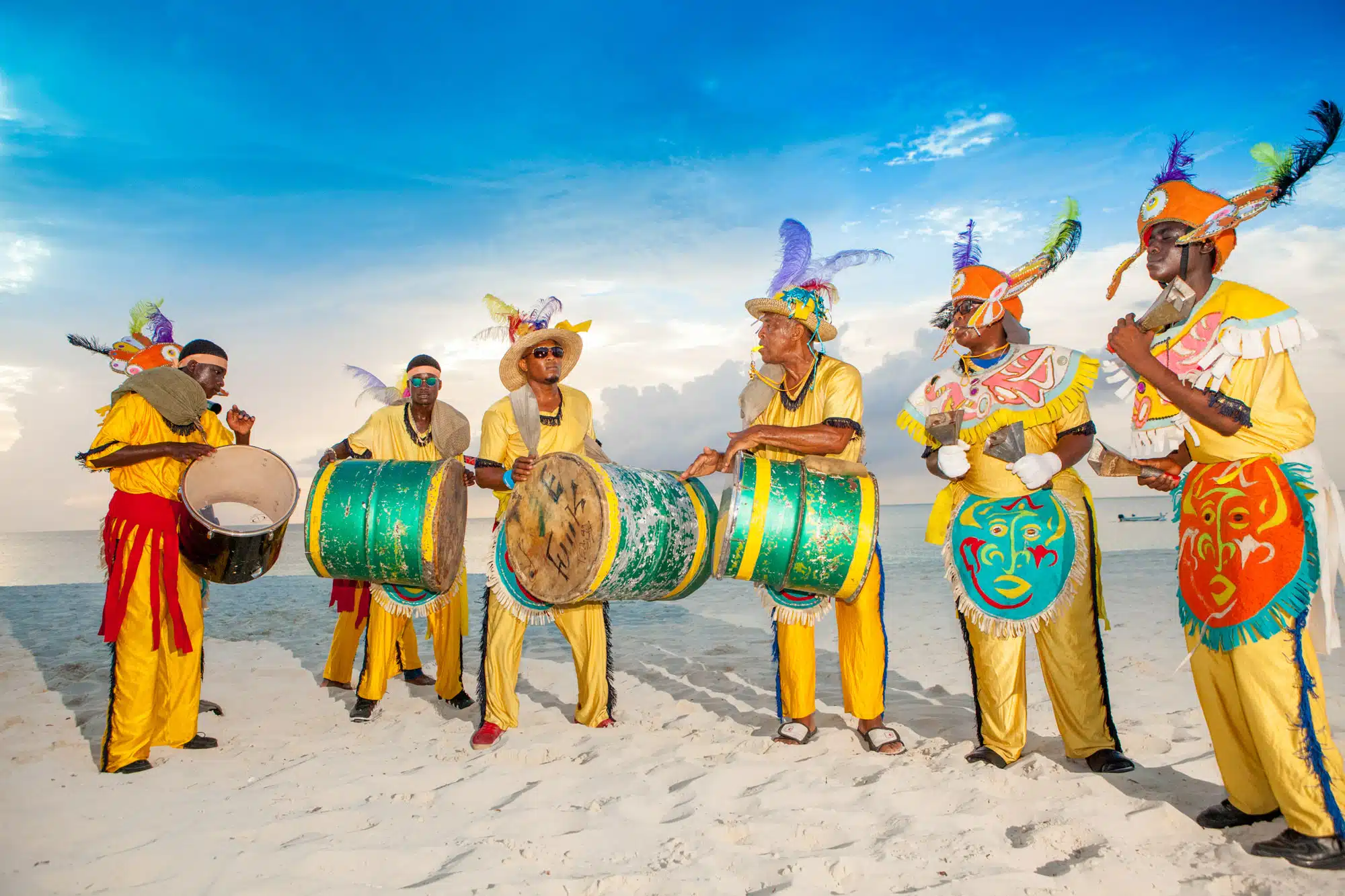
The Junkanoo Museum.
A small museum on the island — and a good one.
The Junkanoo Museum on Old Airport Road, Providenciales is dedicated to the Junkanoo tradition. Founded by Kitchener ‘Kitch’ Penn, who leads We Funk Junkanoo Band at Thursday Fish Fry, the museum celebrates the festival of music, costume, and street parade that runs through the cultural life of the Bahamas and Turks and Caicos. The exhibits cover the history of Junkanoo, the construction of the elaborate costumes made from crepe paper and wire, and the instruments — cowbells, goatskin drums, brass horns — that drive the parade.
Visitors can handle the instruments and try on elements of the costume, which makes it genuinely engaging for children and adults who have seen a Junkanoo performance and want to understand where it comes from. The museum is small but well put together, and the staff know the subject in the way people know something they care about rather than something they were briefed on.
Tours are best booked ahead. It is worth an hour.
Sapodilla Hill.
Carvings in the limestone — 300 years of names left behind by people passing through.
Sapodilla Hill overlooks Sapodilla Bay on Provo’s south-western tip. The rock at the top carries names, dates and small carvings of ships and buildings, left by shipwrecked sailors and travellers waiting for a passing vessel. Most date from the mid-1700s to the mid-1800s. Theft and vandalism have taken many of them, so the TCI National Museum moved the loose stones to safe storage and made casts, some of which are on display at the airport. Many inscriptions remain on the hill, and the site is protected.
Getting there is a ten minute hike and provides a wide view over Chalk Sound and the Caicos Banks. The carvings are the main reason to be here. It is a small site with a lot of history compressed into it — the kind of place that rewards slowing down and reading what is actually there.
ATV tours.
The fastest way across the rougher parts of the island.
Several operators on Providenciales run guided ATV tours across the island’s back roads, coastal tracks, and beach approaches. The tours cover ground that is impractical in a standard car — the rougher southern tracks, the access points to beaches that don’t have paved roads. They run for two to three hours typically and are suitable for adults and older children. A driving licence is required.
For guests who want to cover the island quickly or who enjoy the format, it is a solid option. Your hotel or villa team can connect you with current operators — the outfits change more often than the experience.
Potcake Place.
Grace Bay’s rescue centre — beach walks, puppies, and occasionally a new family member.
Potcake Place K9 Rescue in the Saltmills Plaza runs a morning puppy walk programme that has become one of the most talked-about visitor experiences on the island. Visitors take a rescue potcake puppy out for a walk on Grace Bay Beach and return them an hour later — usually a little reluctantly. Adoption is possible and well-supported for those who find themselves unable to hand the dog back.
For the full story on potcakes and Potcake Place, see our guide to the Turks and Caicos potcake.
The beach bars.
Local institutions — and the right way to end any day on the island.
The beach bar circuit on Providenciales runs from Da Conch Shack and Froggie’s in Blue Hills through Omar’s Beach Hut in Five Cays and out to the Fish Fry on Thursday nights at Bight Park. These are not resort amenities. They are locally owned, often family-run, and the food — conch salad made in front of you, jerk chicken, fresh grilled fish — is some of the best on the island.
A full guide is at best beach bars and casual dining in Turks and Caicos.