


Play
Kiteboarding in Turks and Caicos, Long Bay all year.
Waist-deep flat water, steady trade winds, three miles of empty sand. Why Long Bay Beach is one of the world’s best kiteboarding spots, and how to book.
Waist-deep flat water, steady trade winds, three miles of empty sand. Why Long Bay Beach is one of the world’s best kiteboarding spots, and how to book.
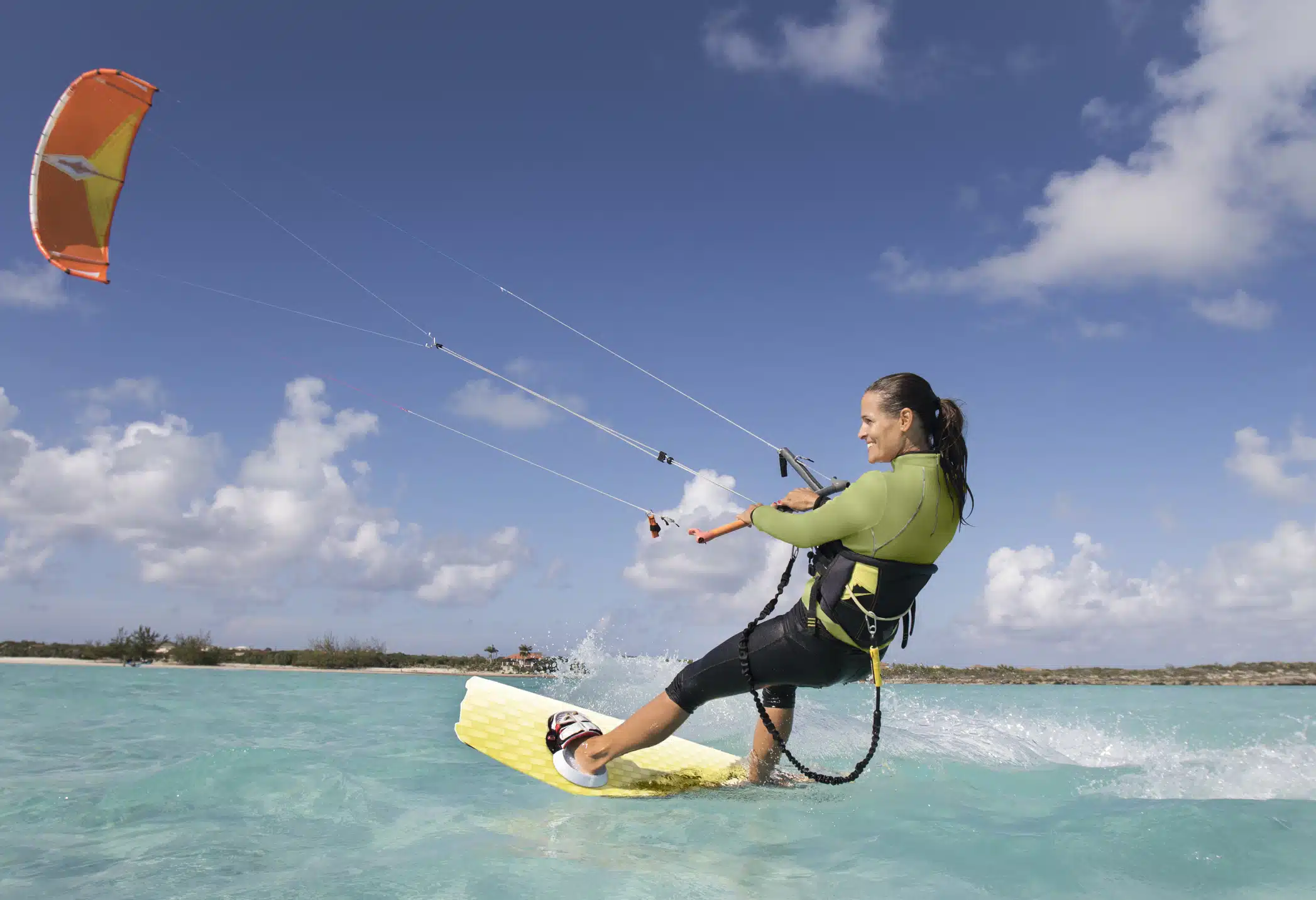
Kiteboarding in Turks and Caicos happens almost entirely on one beach. Long Bay, on the south shore of Providenciales, is three miles of shallow, flat, wind-swept water that behaves like a kite school designed by nature. You can wade out a hundred yards and still stand. The trade winds hold steady most of the year. And the space is enormous, which matters when you’re learning.
Every serious kiteboarding conversation about the Caribbean mentions Long Bay. Here’s why, when to come, and who to book with.
The short answer
Where — Long Bay Beach, south shore of Providenciales. Launch area sits between Beach Enclave and The Shore Club.
When — November through July for the most reliable trades. December through May are the best months. Wind season is essentially eight months long.
Wind — 12 to 18 knots on light days, 20+ on peak. Side-onshore, predictable, and consistent.
Water — waist-deep for hundreds of metres. Warm year-round. Flat when the wind is out of the east, small chop when it's out of the north-east.
Schools — Long Bay Kiteboarding, Kite Provo, and Big Blue Collective. All IKO-certified, all on the beach.
Why Long Bay Works.
Four things make Long Bay a global kite destination, and all four are geographical rather than promotional.
The shallow water. Waist-deep for hundreds of metres out from the beach. This is what makes learning so much easier here than anywhere else — if you drop your kite, you can stand up and reset. No swim of shame back to shore.
The trade winds. Consistent easterly to southeasterly winds hold for most of the year. Light days (12–18 knots) are ideal for lessons and foiling. Peak days (20+ knots) deliver big-air freestyle and full-power freeride. Side-onshore direction means the wind pushes you toward safety, not away from it.
The space. Three miles of beach, wide sandy launch zones, and almost no boat traffic. Room for beginners, freestylers, and foilers to share the water without incident.
The Caicos Banks. Long Bay sits on the northern edge of a huge shallow-water shelf that stretches for miles to the south. The trades cross all that shallow water before they reach the beach, and swells simply can’t build. What arrives at the launch area is flat, clean, and rideable.
When to come.
Peak season: December through May. The trade winds are at their most consistent, blowing steadily from the east or southeast. Water temperature stays warm, and the driest months of the year fall in this window. This is when the international kite crowd arrives.
Shoulder season: June and July. Winds are lighter but still rideable most days. Foilers love this time of year. Prices for accommodation drop, and the beach is quieter.
Quiet: August through October. Winds become unpredictable. Hurricane season peaks. Some operators reduce hours. Not recommended for a dedicated kite trip, though local rippers still ride when conditions allow.
Return: November. Trades start filling in again. The pre-Christmas weeks are a good time for a lesson-heavy trip before high-season prices kick in.
See our weather guide for the full month-by-month breakdown, including water temperatures and rainfall.
The schools.
Three IKO-certified schools operate on Long Bay Beach. All three offer lessons for every level, gear rental, and safaris to remote spots.
On the beach
Right on the launch area. Private and group lessons for all levels, gear rentals, and guided kite safaris. Good default for a first-time visitor.
Longest running
One of the longest-running schools on the island. Structured lessons, safety-first approach, and friendly instructors known for their patience with beginners.
Downwinders & safaris
Expert instruction plus guided downwinders and one-of-a-kind kite safaris to remote cays. Best pick if you're already intermediate or above and want to explore.
If you’re new to kiting.
Long Bay is one of the best places in the world to learn. Shallow water, steady wind, warm sea, and instructors who’ve been doing this for decades. Expect a progression that looks something like this:
Day one — ground school and kite control on land. Learning how the kite behaves in the wind window before you touch the water.
Day two — body drags in the shallow water. You’re in the sea with the kite, learning to steer without a board.
Day three — water starts. Board on your feet, kite in the sky, first attempts at riding. Most people manage a short ride by end of day.
Day four onward — independent riding, upwind progress, and building confidence. Most students go home able to ride, if not carve upwind reliably.
A three-day intensive is enough for most people to get comfortable. Five days gets you competent. Ten days gets you serious.
If you ride already.
Long Bay is not just a beginner beach. Experienced riders come for the same reasons — steady wind, flat water, huge space — plus everything the beach unlocks:
Downwinders. Long stretches along the south shore, with pickup back to Long Bay by chase boat. A different way to see the coast.
Kite safaris. Boat-assisted trips to hidden spots only reachable by sea. Bonefish Point, Bay Cay, or the flats around the Caicos Cays.
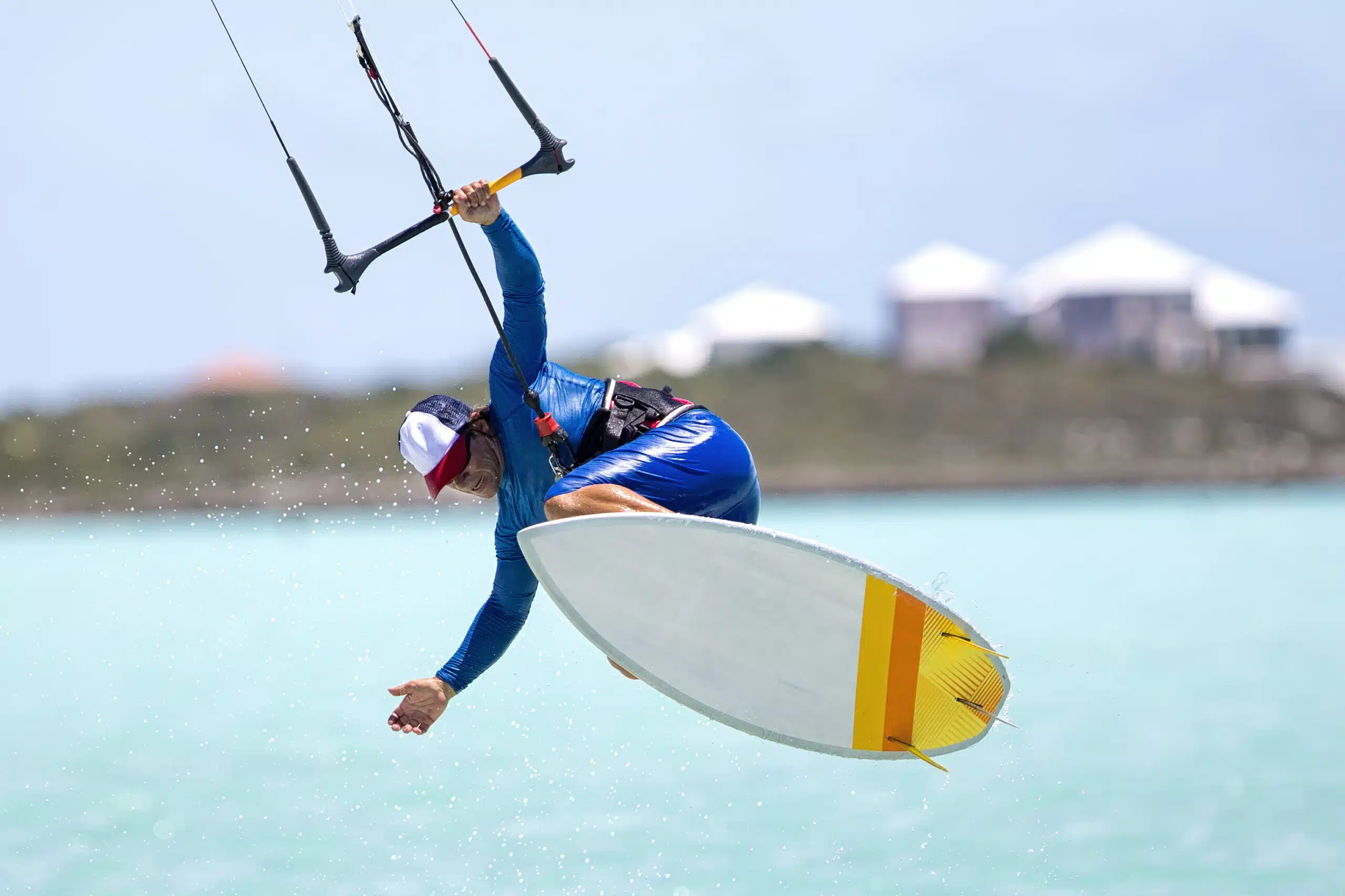
Big-air days. When the trades push above 20 knots, Long Bay becomes a boost session. Flat water launches, safe landings, room to send it.
Freestyle in flat lagoons. Sections of Long Bay stay glassy even in strong wind, thanks to the banks protection. Ideal for grabs, spins, and technical tricks.
Wing foiling, the fast-growing cousin.
Wing foiling, the fast-growing cousin.
Wing foiling has quietly taken over parts of the kiteboarding scene in the last few years. A handheld inflatable wing replaces the kite lines and control bar. A hydrofoil board lifts you above the water once you get moving.
Why it’s growing so fast: shorter learning curve than kiteboarding, less gear to manage, less wind required, and it works in the calm waters of Grace Bay as well as Long Bay.
All three Long Bay schools now offer wing foiling lessons. Worth trying even if you already kite — it’s a different feeling in the water.