


Play
Turks and Caicos diving,
and the reef that made it.
and the reef that made it.
The world’s third-longest barrier reef sits half a mile off our beach. Here’s where to dive, when to go, and who to go with.
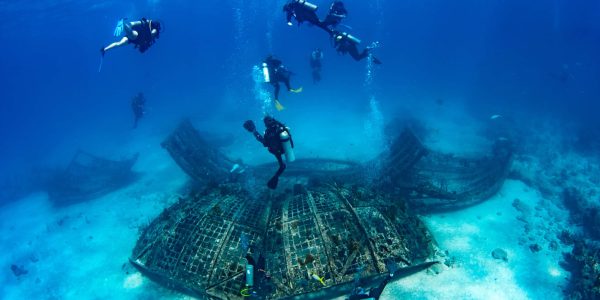
Before the luxury hotels lined Grace Bay, divers were coming here. The barrier reef half a mile off the north shore is the third-longest in the world. Visibility routinely runs 100 feet or more. The water sits between 78°F and 85°F depending on the month. The corals are healthier than most of the Caribbean, because low-impact tourism and a serious local conservation effort have kept them that way.
Turks and Caicos diving is what put these islands on the map long before the beaches did. This is where to go, when to go, and who to book.
Best all-round dive area — West Caicos wall dives. Dramatic drops, big pelagics, rich coral.
Best for shark encounters — French Cay. Reef sharks, nurse sharks, occasional hammerheads.
Best water conditions — May through September. Calm seas, warm water, best visibility.
For big walls — West Caicos, Grand Turk and Salt Cay, where the reef drops 7,000 feet.
Best for first-timers— PADI Discover Scuba (adults, one day) and Bubblemaker (kids 8–9, pool-based). The reef sits 15 minutes from the marina, so trips are short, calm, and easy.
What makes the diving.
Three geographical facts explain why divers keep coming back to Turks and Caicos.
The reef. The Turks and Caicos barrier reef runs the length of the island chain — the third-longest in the world, after Australia’s Great Barrier Reef and the Mesoamerican Reef off Belize. It sits close enough to shore that most dives are ten or fifteen minutes from the marina.
The wall. Just past the reef, the sea floor drops. In some places, straight down 7,000 feet. Wall dives here are what serious divers travel the world for.
The visibility. Water clarity here is among the best in the Caribbean. 100 feet is standard. On the best days, more. Marine national parks like Princess Alexandra and Columbus Landfall keep the water this clean by law.
The best dive sites by island.
Four regions define the diving. Most Provo-based operators can get you to the first three. For Grand Turk and Salt Cay, you’ll want a live-aboard or an inter-island flight.
Off Providenciales
Amphitheater, Coral Gables, Aquarium, Pinnacles.
Best forReef dives close to home. Ideal for novice-to-intermediate divers, families, and one-tank half-day trips.
What you'll seeSmall reef sharks, large grouper, garden eels, pillar corals, vibrant tropicals.
French Cay
Molasses Reef, Half Mile Reef.
Best forSharks and wrecks. An uninhabited cay 20 miles south of Provo. Full-day trip from most operators.
What you'll seeGrey reef sharks, nurse sharks, modern shipwrecks, occasional eagle rays.
West Caicos
Gully, Elephant Ear Canyon, Highway to Heaven.
Best forWall diving. The signature Turks and Caicos experience. Dramatic drops within minutes of the reef.
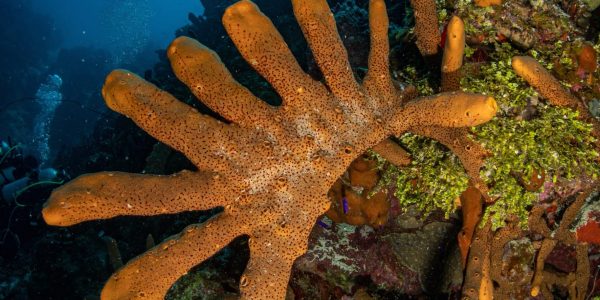
What you'll seeGrey reef sharks, barracuda, eagle rays, grouper, turtles, house-sized elephant ear sponges.
Grand Turk & Salt Cay
The Wall, McDonalds, wreck sites.
Best forThe deepest walls and the whale season. The reef drops 7,000 feet just offshore. Winter brings humpbacks.
What you'll seeGrey reef sharks, barracuda, eagle rays, lobsters, sea turtles, dramatic arches. Whales, January through April.
When to dive.
Turks and Caicos is a year-round diving destination. But conditions do shift.
May through September brings the calmest surface conditions, warmest water (up to 84°F), and best visibility. Summer is peak diving season for most operators. Fewer crowds than winter.
January through April can bring stronger currents on the north-shore sites, especially in February. But it’s also whale season. Humpbacks pass through the Turks Island Passage on their migration, and dives off Grand Turk and Salt Cay give the best chance of underwater encounters.
Water temperatures range from 78°F (26°C) in the winter months to 85°F (29°C) at the summer peak. A 3mm shorty is fine most of the year. A full 5mm is more comfortable in January and February.
New to diving?
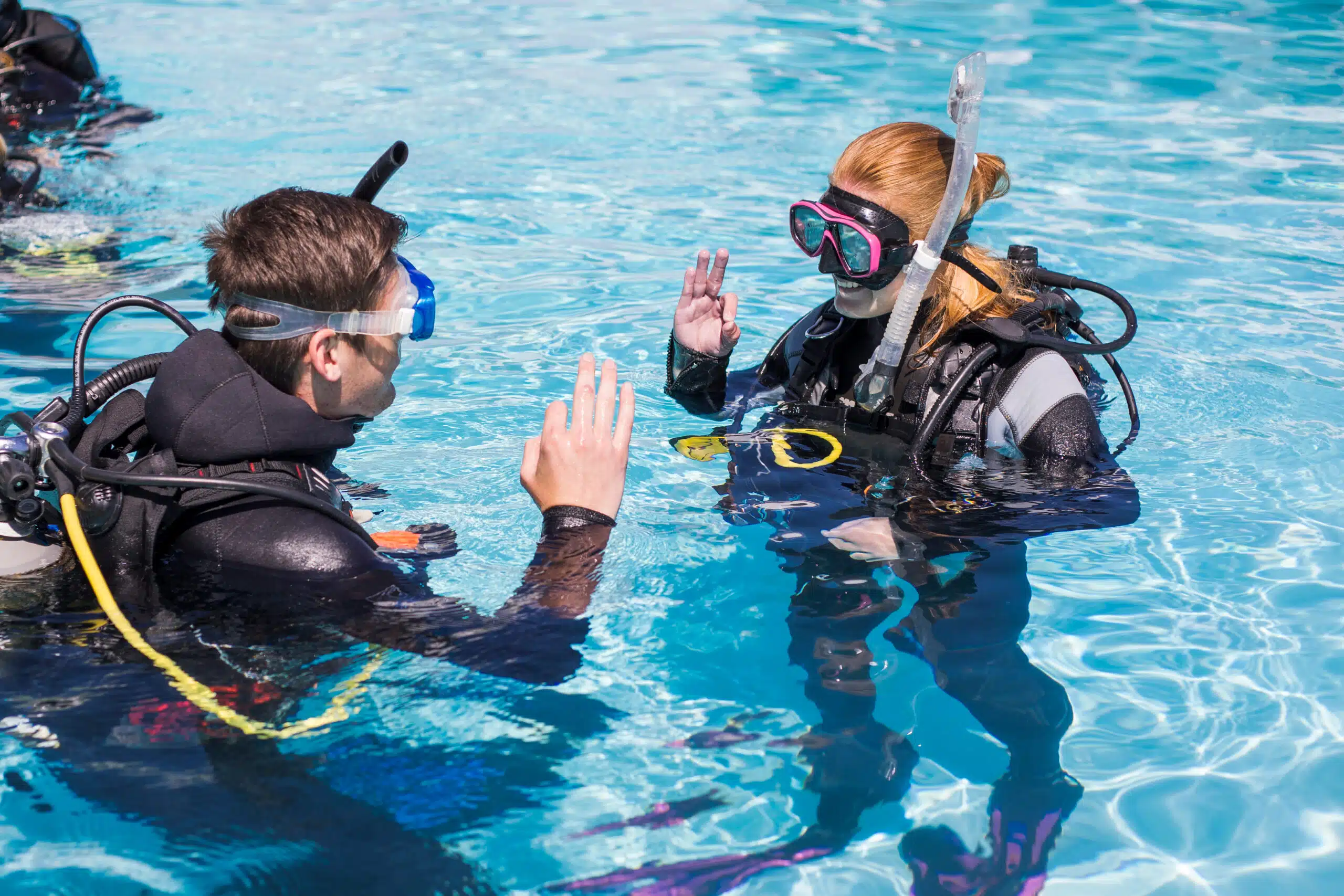
Turks and Caicos is one of the easier places in the world to learn. Warm water, calm bays, clear visibility, and small class sizes make the experience friendlier than most Caribbean destinations.
PADI Discover Scuba Diving is a one-day introduction. No certification, but a supervised dive to 40 feet. Good if you want to try before committing to a course. Anyone 10 and up.
PADI Open Water is the full entry-level certification. Four to seven days, including online coursework and confined-water skills before open-water dives. Certifies you to 60 feet, worldwide, for life.
Advanced Open Water follows immediately and takes you to 100 feet. Many divers do both courses back-to-back on a single trip.
One practical note. You cannot fly within 24 hours of a dive. Plan the last day of your trip as a surface day.
The reef and who protects it.
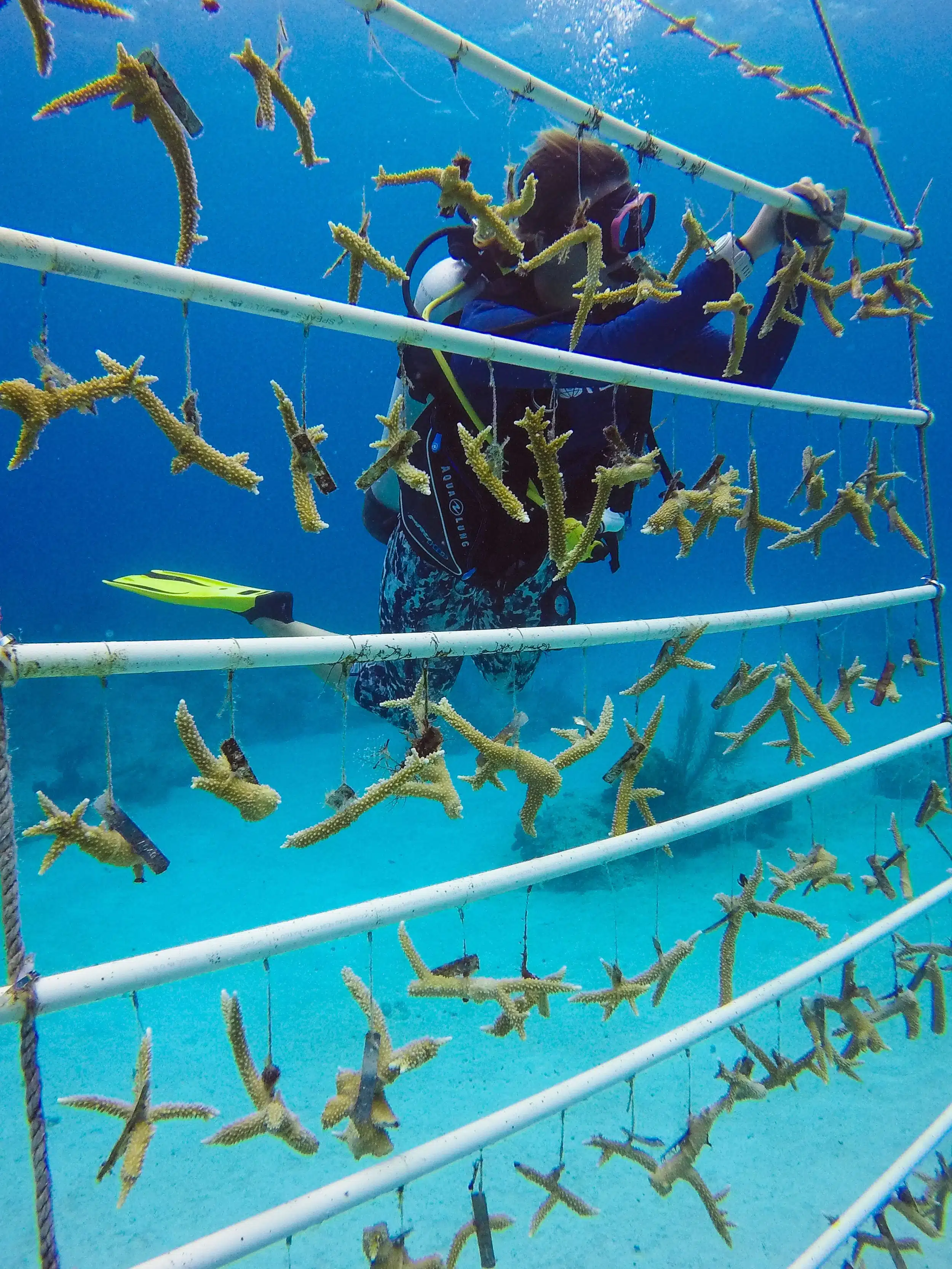
The reason the diving here is still world-class, when much of the Caribbean has degraded, is the Turks and Caicos Reef Fund. A 501(c)(3) nonprofit run by executive director Alizee Zimmermann, they’ve been the regional leader in the treatment and research of Stony Coral Tissue Loss Disease, built and expanded staghorn and elkhorn coral nurseries, and installed and maintained the mooring buoys that keep boats from anchoring on live coral.
Every diver visiting benefits from their work. If you want to give back, they let you adopt a coral or a mooring — a meaningful souvenir that funds real conservation.
Their site is tcreef.org.
Not sure if diving is right for you?
Snorkelling in Turks and Caicos gives you access to most of the same reefs from the surface, with none of the training or equipment. See our snorkelling guide for where to enter and what you'll see.